When you turn up the thermostat on a cold morning and warm air flows from your vents a minute later, a small chain of events is happening inside your furnace. Gas, air, fire, and a fan work together in a careful order, with safety controls watching every step. If you have ever wondered what your gas furnace actually does when it fires up, this article walks you through it in plain language.
A gas furnace heats your home by burning natural gas or propane in a sealed chamber, then moving that heat into your ductwork while sending the exhaust safely outside. It is one of the most common heating systems in cold climates, and it has been refined over decades into a reliable, efficient machine. Here is how each part does its job.
The Call for Heat
Everything starts at the thermostat. When the room temperature drops below the setting you chose, the thermostat sends a low-voltage signal to the furnace control board. That signal is the call for heat, and it sets the whole sequence in motion.
The control board is the brain of the furnace. It checks that the system is ready, then starts the parts in the right order. It will not open the gas valve until it has confirmed that the venting fan is running and the safety switches are in their normal state. If any check fails, the furnace locks out and waits, rather than lighting a burner it cannot vent.
Modern thermostats can also stage the heat. On a mild day, the furnace may run at a lower firing rate to hold the temperature steady. On a bitterly cold morning, it fires at full rate to bring the house up to temperature. Either way, the call for heat is the trigger, and the control board runs the show from there.
The Inducer Fan Clears the Way
Before any gas flows, the inducer fan starts. This small fan sits near the exhaust and pulls air through the heat exchanger and out the vent pipe. Its job is to clear out any leftover gases from the last cycle and to create a draft so exhaust will flow outside once the burners light.
A pressure switch watches the inducer fan. It only closes when the fan is moving enough air, and the control board will not move to the next step until that switch closes. If the vent pipe is blocked by a nest, ice, or debris, the pressure switch stays open and the furnace will not light. That is a safety feature, not a fault, and it protects your home from exhaust backing up indoors.
Ignition Lights the Burners
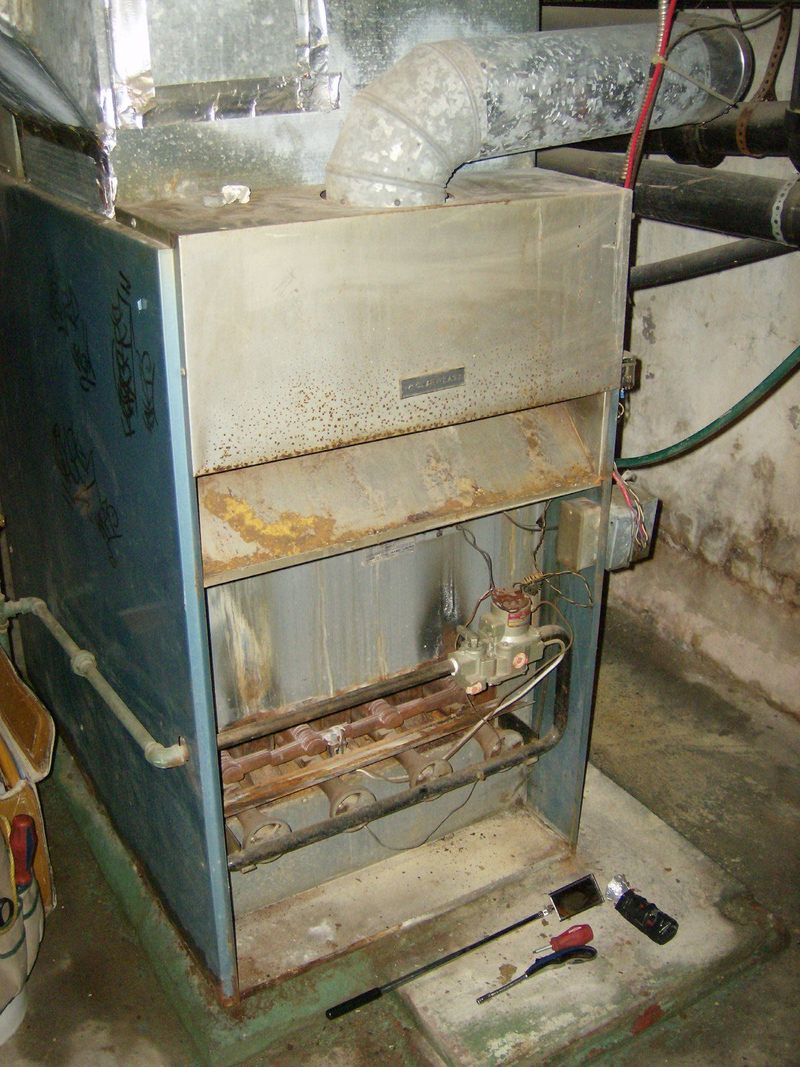
Once the draft is proven, the control board opens the gas valve and the igniter lights the burners. Older furnaces used a standing pilot light that burned all winter. Modern furnaces use an electronic igniter instead, usually a hot surface igniter that glows white-hot or a spark igniter that clicks like a gas grill.
Gas flows through the valve into the burner assembly, where it mixes with air and ignites into a row of steady blue flames. A flame sensor watches those flames. It is a small metal rod that sits in the flame and sends a tiny signal back to the control board as long as fire is present.
If the flames go out or never light, the sensor reports the problem and the control board shuts off the gas valve within seconds. This is one of the most important safety steps in the whole cycle. Gas never flows into the furnace for long without a flame to burn it, and the furnace will try a limited number of times before locking out and waiting for service.
The Heat Exchanger Does the Real Work
The flames heat the heat exchanger, a set of metal tubes or clamshell-shaped chambers that separate the combustion side from the air your family breathes. Hot exhaust gases flow through the inside of the heat exchanger, and the metal walls grow very hot.
At the same time, the blower fan pushes cool return air from your home across the outside of the heat exchanger. The air picks up heat from the hot metal and carries it into the supply ducts. The combustion gases never mix with your household air. They stay inside the exchanger and flow out through the vent, while only clean, warmed air reaches your rooms.
The heat exchanger is the heart of the furnace and also the part most affected by age. A cracked heat exchanger can let exhaust gases into the household air, which is why technicians inspect it closely during a tune-up. A healthy exchanger is sealed, solid, and free of rust-through or cracks.
The Blower Moves Warm Air Through Your Home
After the burners have heated the exchanger for a short time, the control board starts the main blower. The delay matters. If the blower started at once, it would push cold air into your rooms. By waiting until the exchanger is hot, the furnace delivers warm air from the first vent flow.
The blower pulls air from your return ducts, pushes it across the heat exchanger, and sends it out through the supply ducts to every room. It keeps running until the thermostat is satisfied, then it usually runs a little longer to push the last of the heat out of the exchanger and into the house.
Many modern furnaces use a variable-speed blower that can run gently for long stretches rather than blasting on and off. That steady airflow keeps temperatures even from room to room, moves air through the filter more effectively, and runs more quietly than an older single-speed blower.
Where the Exhaust Goes
Burning gas makes exhaust, mostly water vapor and carbon dioxide, along with a small amount of other combustion byproducts. That exhaust must leave the house safely, and the venting system is built for that job.
Older furnaces vent through a metal flue that rises through the roof, using the natural rise of hot air to carry exhaust out. Newer high-efficiency furnaces use a plastic vent pipe, often out through a side wall, because their exhaust is cool enough that it can condense into water. That water drains away through a small condensate line.
Keep the vent clear. A blocked vent will trip the pressure switch and stop the furnace, and in an older chimney-vented system, a blockage is a serious hazard. Never store boxes or clutter against the vent pipe, and have the venting inspected if you notice soot, rust, or a strange smell near the furnace.
How the Furnace Shuts Down
When the thermostat senses that the room has reached the set temperature, it ends the call for heat. The control board closes the gas valve at once, and the flames go out. The blower keeps running for a short time to cool the heat exchanger and push the remaining warm air into the house, then it stops. The inducer fan runs briefly to clear the last exhaust, then stops too.
The furnace then waits quietly until the temperature drops again. Each cycle follows the same order: call for heat, inducer fan, ignition, flame check, blower, and shutdown. The order never changes, because the order is what keeps the system safe.
What Can Go Wrong
A furnace that will not start may have a tripped breaker, a thermostat set to the wrong mode, a dirty filter choking airflow, or a safety lockout after failed ignition attempts. Check the thermostat and filter first, and try turning the power off and on once. If the furnace tries to light and fails again, call a technician rather than resetting it over and over.
Short cycling, where the furnace turns on and off every few minutes, often points to an overheating heat exchanger from a clogged filter, blocked vents, or a blower problem. A yellow or flickering burner flame instead of a steady blue one is a sign to call for service. So is any smell of gas. If you smell gas, leave the house and call your gas utility or emergency services from outside.
Regular care keeps the cycle running smoothly. Change the filter every month or two during heating season, keep vents open and unblocked, and book a yearly tune-up before winter. A technician will clean the burners, test the safety controls, inspect the heat exchanger, and check the venting. Your furnace does a careful, ordered job every time it heats your home. A little care from you keeps it doing that job safely for years.
Related Guides